




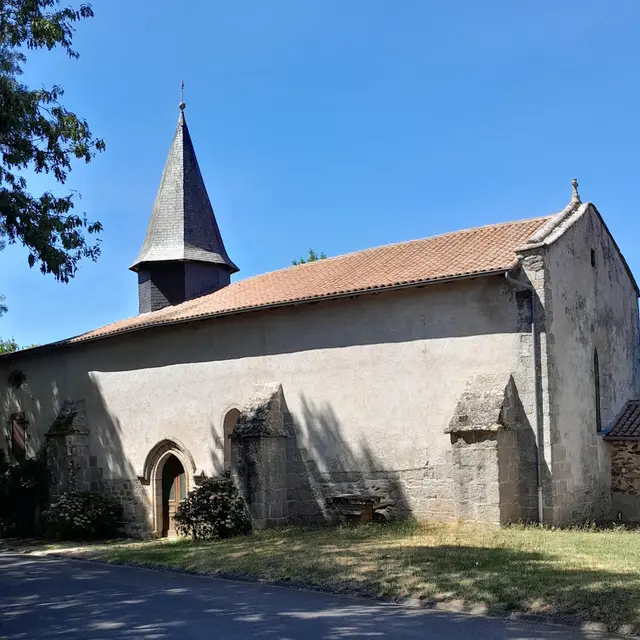
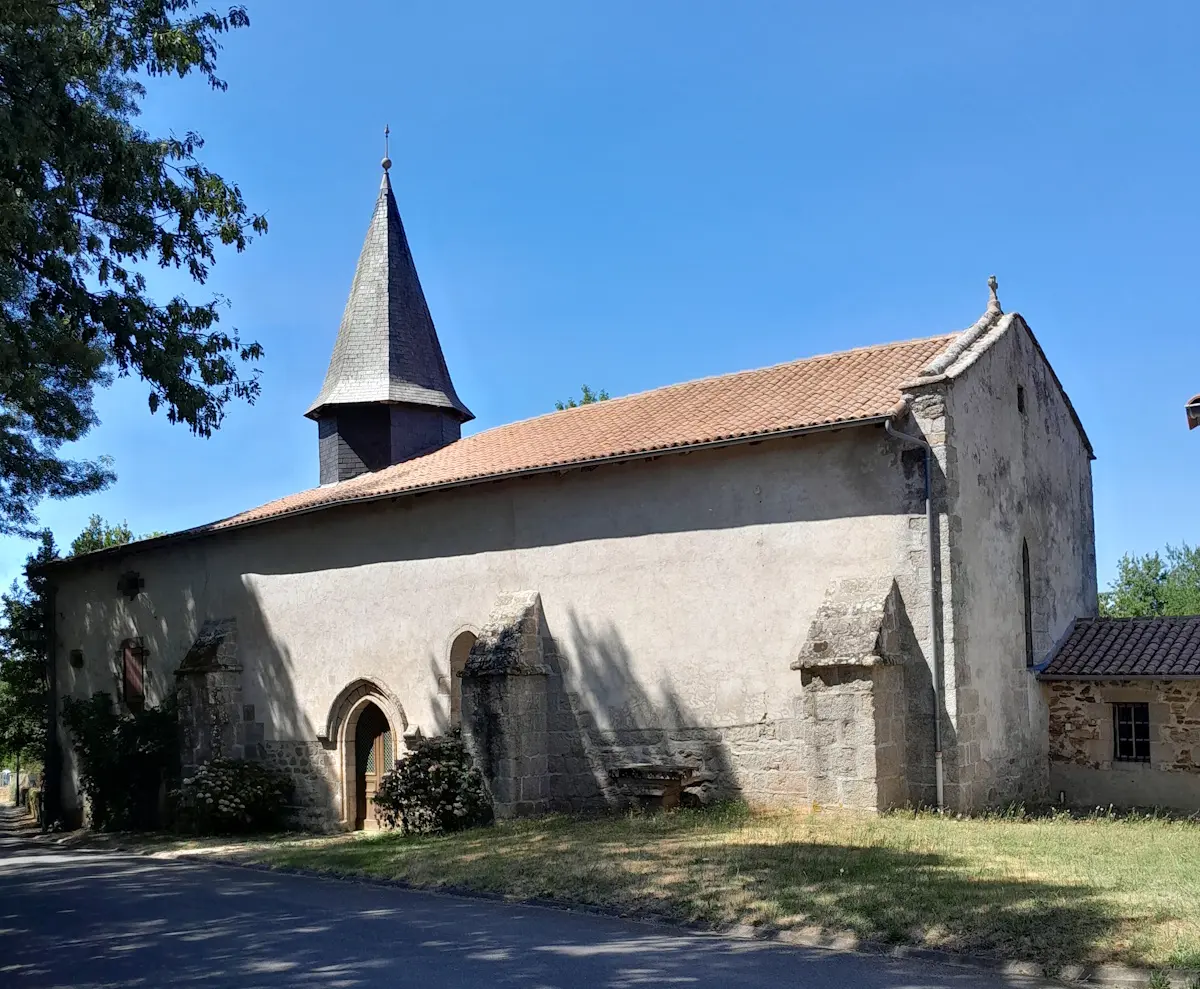
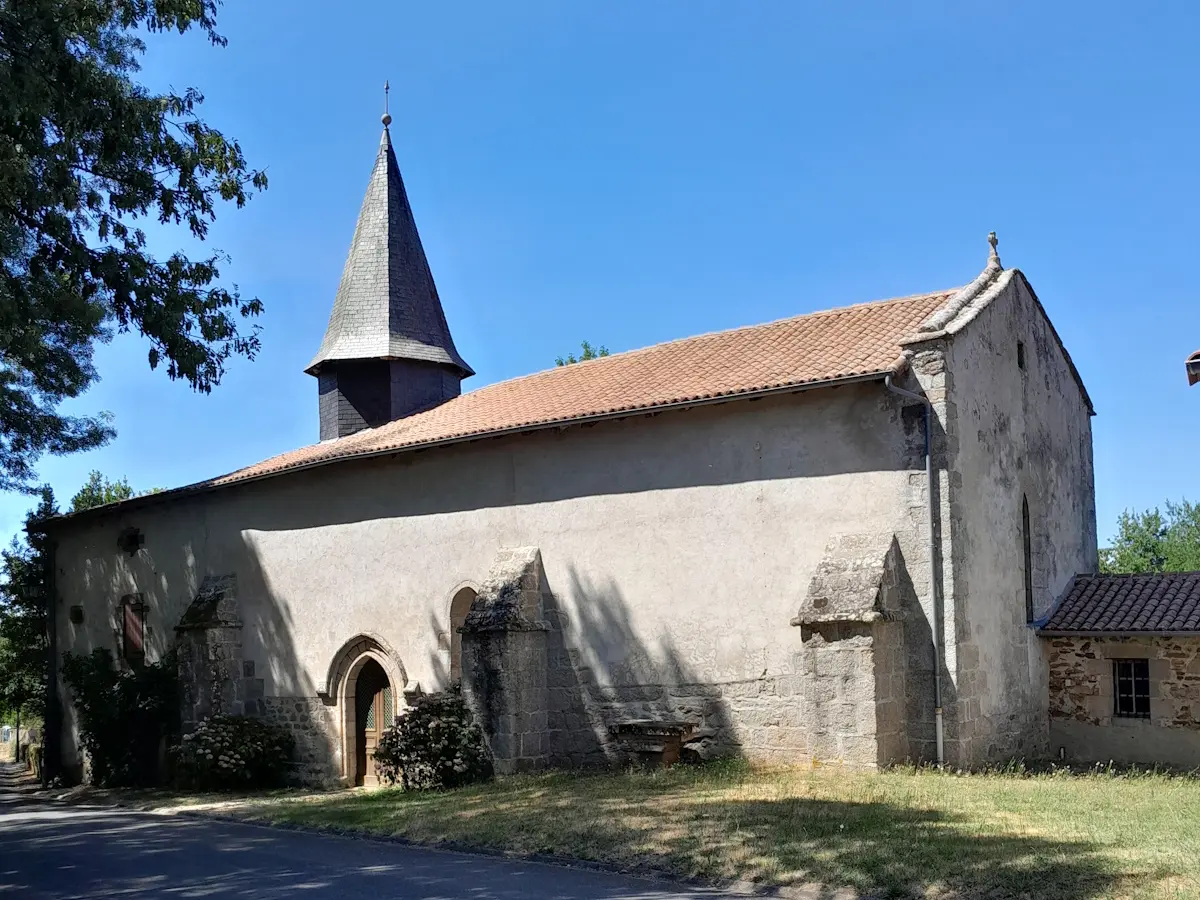
Description
Dating back to the 13th and 15th centuries, the church of Sainte-Marie-de-Vaux boasts listed furnishings: a polychrome wooden statue of Sainte-Catherine, a wooden cupboard set into the masonry and a 19th-century monstrance. A huge 15th-century fresco covers the vault. This mural painting forms a complete and homogeneous whole that bears witness to our local religious heritage. In front of the church stands a Gallo-Roman stele, a monolithic plinth with a molded base on three sides. Was it intended as a stone for the dead, an altar, or could it contain the ashes of a deceased person, as the base appears to be upside down? It also seems to have been moved. So what's its secret?